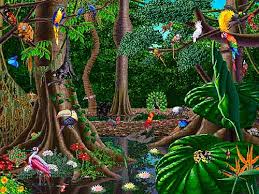
Animals are a major group of mostly multicellular, eukaryotic organisms of the kingdom Animalia or Metazoa. Their body planeventually becomes fixed as they develop, although some undergo a process of metamorphosis later on in their life. Most animals are motile, meaning they can move spontaneously and independently. Most animals are also heterotrophs, meaning they must ingest other organisms for sustenance.
Most known animal phyla appeared in the fossil record as marine species during the Cambrian explosion, about 542 million years ago.
Nearly all animals undergo some form of sexual reproduction. They have a few specialized reproductive cells, which undergo meiosis to produce smaller motile spermatozoa or larger non-motile ova. These fuse to form zygotes, which develop into new individuals.
Many animals are also capable of asexual reproduction. This may take place throughparthenogenesis, where fertile eggs are produced without mating, or in some cases throughfragmentation.
A zygote initially develops into a hollow sphere, called a blastula, which undergoes rearrangement and differentiation. In sponges, blastula larvae swim to a new location and develop into a new sponge. In most other groups, the blastula undergoes more complicated rearrangement. It first invaginates to form a gastrula with a digestive chamber, and two separategerm layers - an external ectoderm and an internal endoderm. In most cases, a mesoderm also develops between them. These germ layers then differentiate to form tissues and organs.

No comments:
Post a Comment